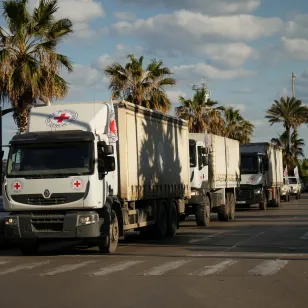
As the humanitarian situation in Lebanon continues to deteriorate amid escalating hostilities, the strain on the national healthcare system has reached a critical breaking point. Hospitals that were already struggling with a multi-year economic crisis are now facing an influx of trauma cases, while supply chains for essential medicines remain severely disrupted.
Golden Heart, in partnership with the ICRC, has intensified its response to ensure that frontline medical facilities remain operational. Over the past month, we have facilitated the delivery of over 45 tons of surgical equipment, anesthetic drugs, and specialized wound-care kits to three major referral hospitals in the southern regions and Beirut.
Regional Impact Report
Since the escalation began, we have supported over 12,000 emergency consultations and provided life-saving surgery for 850 critically wounded civilians.
The challenges are not limited to logistics. Continuous shelling has made it increasingly dangerous for medical staff to commute to work. "We are seeing doctors and nurses working 48-hour shifts because their replacements cannot safely traverse the roads," says Dr. Elias Rahal, a senior medical coordinator on the ground. "Our priority is not just the supplies, but the safety of those who administer them."
Beyond emergency trauma care, the collapse of primary health services has left thousands of patients with chronic illnesses—such as diabetes and heart disease—without access to regular medication. Golden Heart has established five mobile health units that travel to displacement centers, providing basic triage and ensuring that the most vulnerable do not become "secondary casualties" of the conflict.
Our commitment to Lebanon is unwavering. As the conflict shows no signs of abating, we are calling for the protection of medical personnel and facilities, which are afforded special status under International Humanitarian Law. Aid is a lifeline, but respect for the neutrality of healthcare is what keeps that lifeline from snapping.